

What Is Hektor?
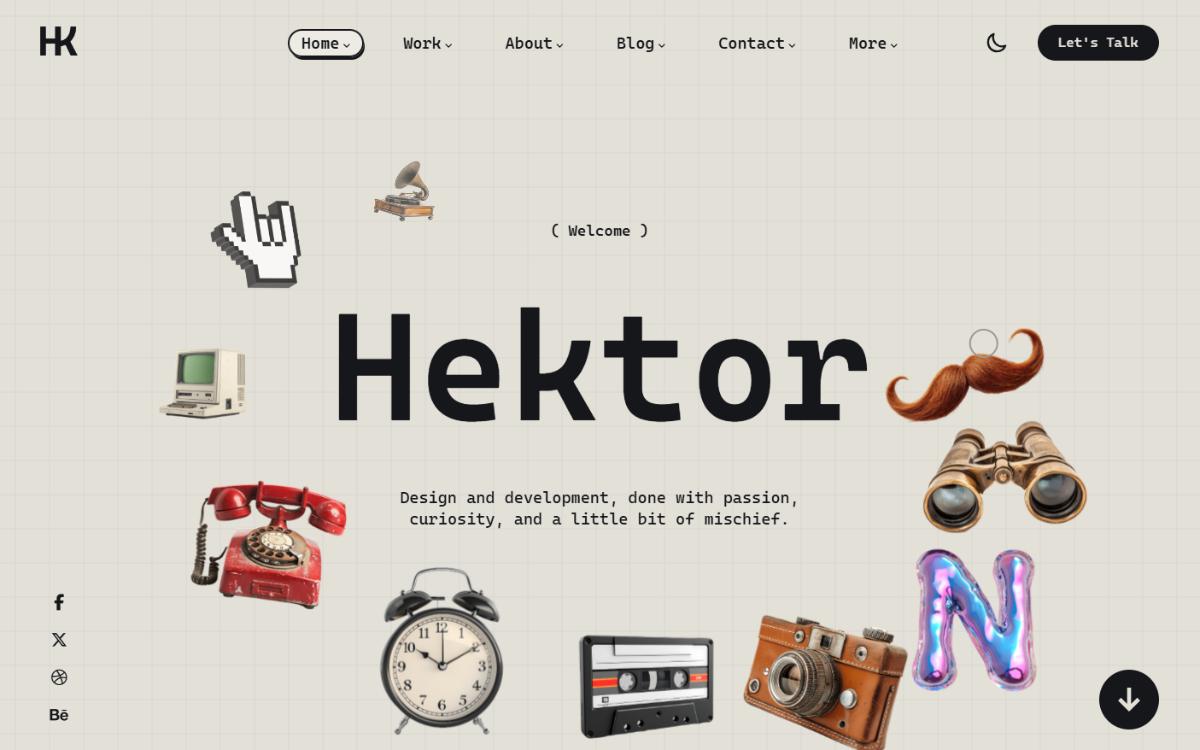
Hektor is a premium HTML5 template built for creative professionals, agencies, freelancers, and studios. It is designed to showcase work, services, and brand identity in a clean and structured way.
Unlike CMS-based themes, Hektor is a static template. That means no database, no plugin dependencies, and no platform lock-in. You get a lightweight foundation that you can fully control and customize.
Why Choose a Static HTML Template?
There has been a steady move toward simpler, performance-focused websites. Static templates fit this model because they remove unnecessary layers between the user and the content. Instead of generating pages on each request, everything is prebuilt and delivered as-is.
That changes how your site behaves in production, especially in terms of speed, reliability, and control.
1. Better Performance
With a static setup, the server delivers ready-made HTML files. There is no runtime rendering, no database queries, and no backend logic that needs to execute before the page loads.
In practice, this leads to:
- Lower Time to First Byte (TTFB) since the server returns files immediately.
- Faster Largest Contentful Paint (LCP) because the browser can render content right away.
- More predictable performance under load, as there is no server-side bottleneck.
2. Improved Security
Most common website vulnerabilities come from dynamic systems: databases, plugins, authentication layers, and server-side code. Static sites remove a large part of that surface area.
Key differences:
- No database → no SQL injection risk.
- No plugin ecosystem → no dependency-related vulnerabilities.
- No server-side runtime → fewer entry points for exploits.
3. Full Control
With a static template, you are not tied to a specific CMS structure, admin panel, or plugin system. The codebase is yours to shape.
That gives you flexibility at multiple levels:
- Architecture – use plain HTML, integrate a static site generator, or connect a headless CMS.
- Hosting – deploy on any static hosting platform or CDN without special requirements.
- Tooling – plug in your own build process (Vite, Webpack, Gulp, etc.) or keep it minimal.
- Performance tuning – optimize exactly what you need without fighting a framework.
For developers and agencies, this also means easier reuse across projects. You can strip it down, extend it, or integrate it into a larger system without being constrained by someone else’s conventions.
In short, static templates trade built-in convenience for speed, simplicity, and control. For many modern websites, especially portfolios and agency sites, that trade-off is often worth it.
Key Features That Matter
Clean, Flexible Structure
The codebase is well-organized and clearly commented, which makes a real difference once you move beyond simple edits.
Instead of digging through a monolithic file or tightly coupled components, you’re working with a structure that separates concerns properly. Layouts, components, scripts, and styles are grouped logically, so you can find what you need without guesswork.
- Reusable components
- Predictable structure
- Easy long-term maintenance
Fully Responsive Design
The layout adapts smoothly across desktop, tablet, and mobile devices, ensuring consistent presentation.
Multiple Layouts and Components
- Portfolio grids with filtering
- Blog pages
- Custom headers and sections
- Reusable UI elements
Built-In Interactions
Hektor includes modern interactions without unnecessary overhead:
- Smooth scrolling
- Page transitions
- Hover effects
- Parallax elements
Light and Dark Modes
Native support for both themes makes it easy to match branding or user preferences.

SEO and Performance
Hektor is built with clean, semantic markup and a structure that supports strong search visibility.
- Semantic HTML structure
- Fast loading times
- Minimal dependencies
To get the best results, combine the template with high-quality content, proper metadata, internal linking, and optimized hosting.
Who Is It For?
Freelancers and Developers
Hektor is a strong fit if you prefer working directly with code and want a reliable starting point without committing to a CMS. Instead of adapting your workflow to a platform, you can shape the project around your own stack and standards.
This is especially useful if you:
- Build custom websites for clients and need a reusable base.
- Want full control over markup, styles, and scripts.
- Prefer lightweight projects without unnecessary dependencies.
- Integrate your own tooling such as build pipelines or headless CMS solutions.
You get a clean foundation that speeds up development without limiting how you structure or scale the project.
Creative Agencies
For agencies, Hektor works well as a repeatable foundation across multiple client projects. Its structure allows you to standardize development while still delivering custom designs.
In practice, this means:
- Faster project delivery by reusing core layouts and components.
- Consistent code quality across different projects and team members.
- Easier maintenance, since the structure remains predictable.
- Flexibility to adapt the template for different industries and branding styles.
It helps reduce rebuild time while keeping enough flexibility to avoid “template-looking” results.
Designers and Artists
If your primary goal is to showcase visual work, Hektor provides a solid presentation layer without requiring backend setup.
You can focus on content and design instead of infrastructure:
- Display portfolios using structured, responsive layouts.
- Highlight projects with smooth interactions and visual transitions.
- Customize typography, colors, and layouts to match your personal style.
- Launch quickly without dealing with CMS configuration or plugin management.
It is a practical option if you want a polished, high-performance portfolio with minimal technical overhead.
Performance-Focused Projects
Hektor is also well suited for projects where performance, reliability, and long-term maintainability are key priorities.
Because it is a static template, you can:
- Achieve fast load times with minimal optimization effort.
- Deploy easily to CDNs or static hosting platforms.
- Avoid common performance bottlenecks tied to dynamic systems.
- Maintain a simpler codebase that is easier to audit and update.
This makes it a good choice for landing pages, portfolios, and business websites where speed and stability directly impact user experience and search visibility.
Use Cases
- Personal portfolios
- Agency websites
- Designer or developer resumes
- Photography showcases
- Minimal business websites
Final Thoughts
Hektor focuses on what matters: speed, clarity, and flexibility.
If you are comfortable working with code and want full control, it provides a strong foundation. If you prefer drag-and-drop tools or need a full CMS out of the box, a different solution may be more practical.
Leave a Comment: